
SOP for Handling Industrial Dust to Protect Employee Health That Must Be Followed
19 February 2026
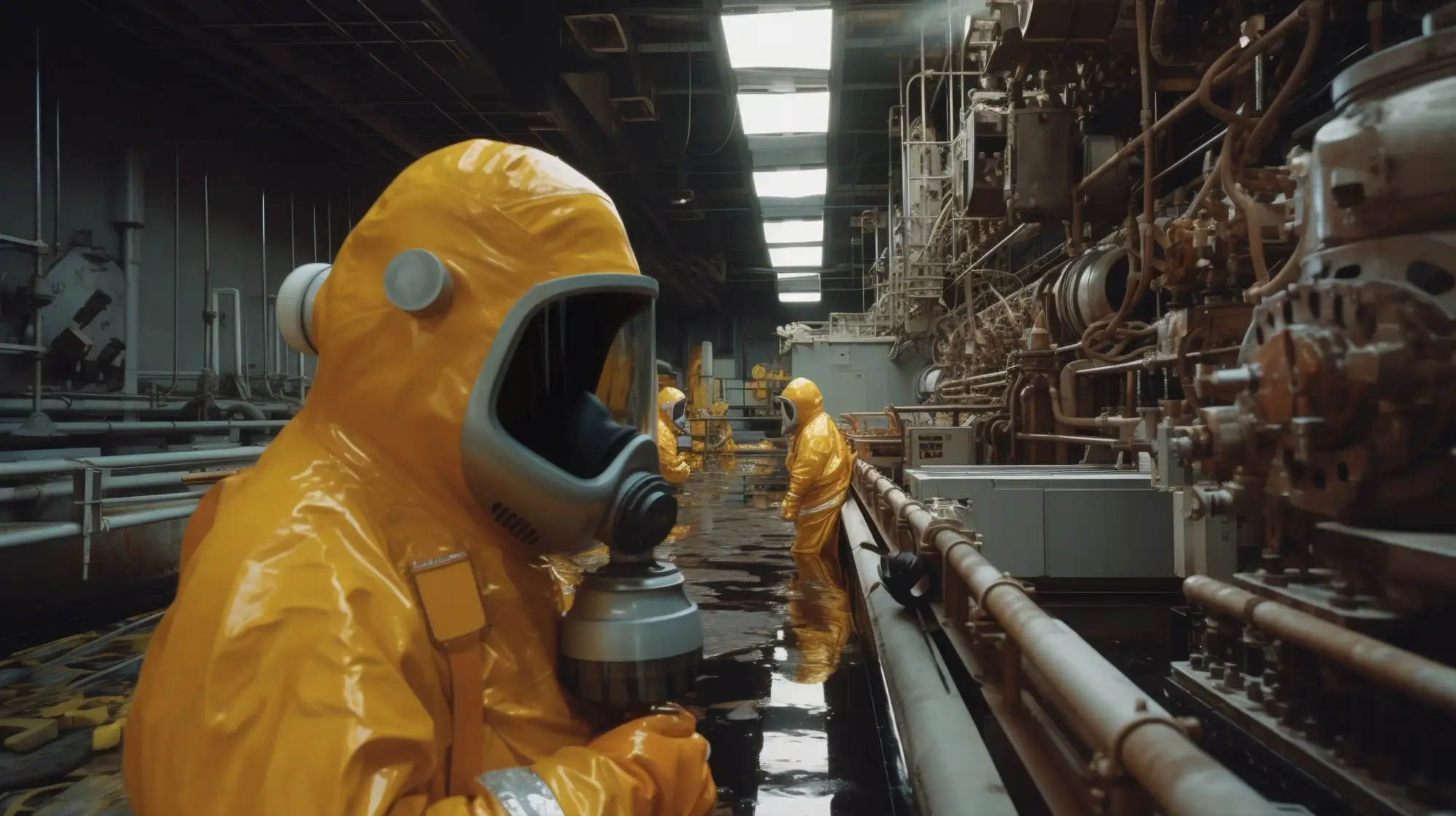
Industrial dust is one of the most common air contaminants found in production areas, logistics facilities, and manufacturing plants.
Unlike ordinary dust, industrial dust originates from cutting, grinding, burning, and material processing activities, allowing fine particles to disperse into the air and settle on surfaces.
The problem is that prolonged inhalation of this dust can disrupt the respiratory system, ultimately affecting employee productivity and overall well-being.
That is why, as a large-scale industrial company, you must ensure the health of every employee by establishing clear and well-structured SOP standards.
This can be effectively implemented when you collaborate with professional service providers, such as reputable Jakarta outsourcing companies specializing in workplace environmental control.
To better understand the health impacts and the proper handling SOP, read the full explanation below!
Health Effects of Industrial Dust on Workers and the Work Environment
Industrial dust is not merely an aesthetic or cleanliness issue. Fine dust particles (PM2.5/PM10) can penetrate deep into the human respiratory system. Beyond that, several critical health effects must be considered:
1. Respiratory Tract Irritation
Dust suspended in the air can cause irritation to the nose, throat, and lungs when inhaled.
Common symptoms include coughing, a burning sensation, or shortness of breath after exposure in the workplace. The risk significantly increases when dust levels exceed safe exposure limits.
2. Chronic Lung Disease
Repeated exposure to industrial dust can trigger conditions such as chronic bronchitis or pneumoconiosis (black lung disease), depending on the type of particles inhaled.
Studies show that workers exposed to silica or asbestos dust have a higher risk of developing long-term lung disorders. These findings highlight the importance of active dust control in production environments.
3. Allergies and Sensitization
Certain types of dust may trigger allergic reactions or sensitization in susceptible employees.
Reactions can include sneezing, itchy eyes, or worsening asthma symptoms. Maintaining a clean work environment and reducing dust levels plays a crucial role in minimizing these conditions.
4. Overall Impact on Employee Well-Being
In addition to respiratory issues, dust can disrupt sleep quality, cause skin irritation, and reduce workplace comfort. Continuous discomfort may negatively impact productivity and employee morale.
Employee well-being is a fundamental responsibility of companies committed to maintaining a healthy work environment.
Read Also: Essential Cleaning Equipment for Professional Hygiene Standards
Industrial Dust Exposure Limits According to OHS Standards and Government Regulations
In Indonesia, industrial dust exposure limits are strictly regulated under Minister of Manpower Regulation No. 5 of 2018 concerning Occupational Health and Safety (OHS) in the Work Environment. This regulation serves as a reference for companies in monitoring and controlling particle exposure in the workplace.
The regulation establishes Threshold Limit Values (TLV) for various types of physical exposure, including dust. For example, total dust has a limit of approximately 10 mg/m³, while respirable crystalline silica has a much lower limit (around 0.05 mg/m³) due to its higher risk to workers’ respiratory systems.
These limits are not merely numerical standards; they are designed to protect employee health, prevent occupational diseases such as chronic lung disorders, and ensure that companies implement proper risk control through regular monitoring.
Routine dust monitoring using specialized measuring instruments is a company obligation to ensure exposure does not exceed the permitted limits during working hours, typically 8 hours per day. Compliance with these standards helps companies meet national OHS requirements while maintaining a safe and productive work environment.
Read Also: Legal Standards for Office Cleaning Services
Effective SOP for Handling Industrial Dust in Production Areas
An industrial dust handling SOP includes systematic steps to reduce particle exposure in production areas. Each step must be documented, tested, and regularly communicated. The SOP includes:
1. Identify Dust Sources
Companies must map out which areas and processes generate industrial dust, including cutting, grinding, and material processing activities prone to producing fine particles. Identifying sources allows companies to determine the most effective control points.
2. Control Dust at the Source
Once identified, apply local control methods such as industrial vacuum systems, process enclosures, or closed equipment to minimize airborne dust dispersion.
Controlling dust at its source significantly reduces the burden on general filtration systems. This approach is commonly recommended for large factories seeking to improve workplace air quality.
3. Proper Ventilation and Filtration
An effective ventilation system continuously replaces contaminated air with clean air.
HEPA or similar filtration systems capture fine particles that ventilation alone cannot remove. The placement of these systems must align with the production layout to ensure optimal airflow.
4. Appropriate Personal Protective Equipment (PPE)
In addition to technical controls, companies must provide PPE such as respirator masks for employees working in high-dust areas.
PPE offers direct protection against exposure that cannot be fully controlled mechanically. Proper training is necessary to ensure effective usage.
5. Periodic Monitoring and Measurement
Regular dust monitoring ensures that SOP implementation remains effective and exposure limits are not exceeded.
Particle measuring devices can be used to monitor PM2.5/PM10 levels in work areas. This data serves as a basis for continuous improvement.
6. Employee Training and Education
Employees must be trained to understand the risks of industrial dust and how SOP procedures are implemented. Education encourages safe behavior when working in dusty environments. Regular training strengthens compliance with SOP standards.
7. Emergency Handling Procedures
The SOP must also include procedures for unexpected dust spikes or exposure incidents. This includes temporary evacuation and immediate medical assistance if needed. Emergency procedures must be easily accessible and clearly understood by all employees.
Read Also: Cleaning Service Training for the Highest Hygiene Standards
Don’t Wait for Problems — Improve Workplace Cleanliness and Safety Standards with PT.SOS
After understanding the serious impact of industrial dust, the exposure limits that must be observed, and the SOPs that must be consistently implemented, one important consideration remains: how to apply all of these effectively.
This is where professional manpower plays a crucial role. Workplace environmental management—such as dust control, production area cleanliness, and SOP implementation—requires trained and experienced personnel.
PT SOS, as an experienced outsourcing workforce provider, can help your company implement high-standard cleaning solutions, workplace environmental maintenance, and industrial dust control.
Don’t wait for health issues, productivity disruptions, or regulatory violations to occur. Contact PT SOS today for a consultation on reliable and professional workforce solutions tailored to your production area needs.
More News
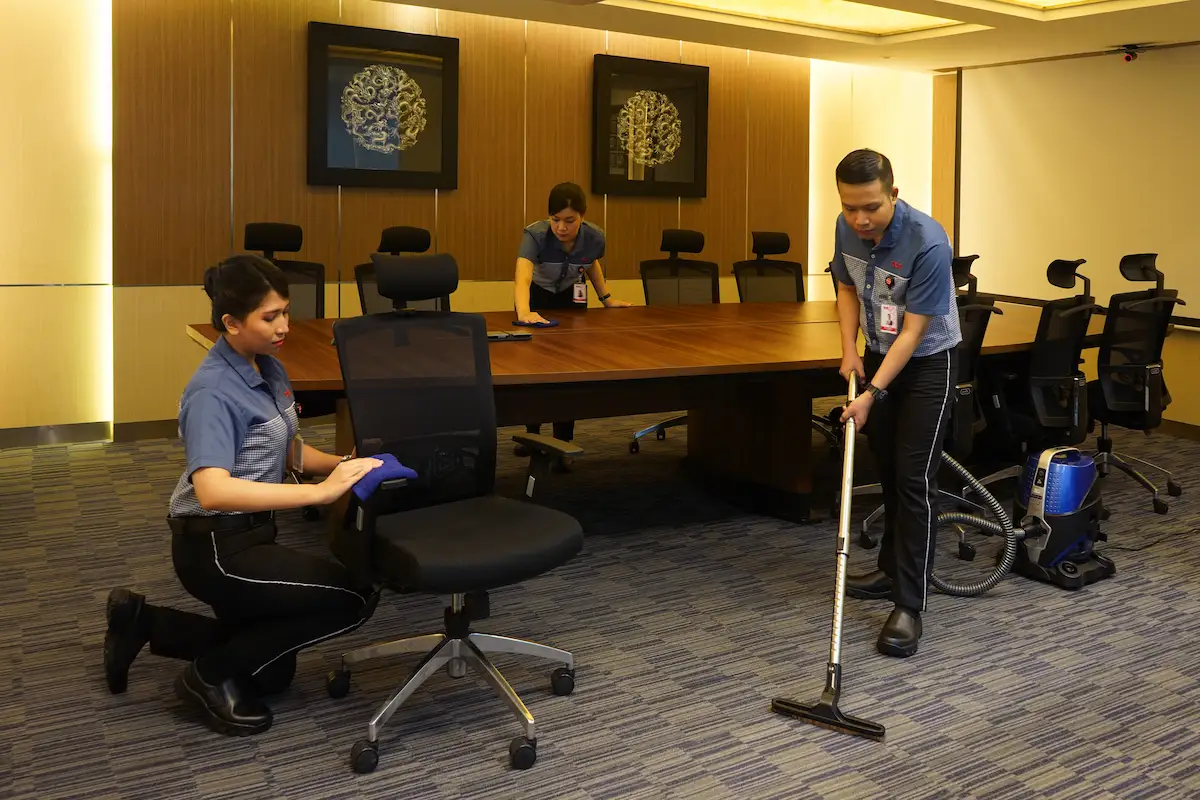
Guide to Choosing the Right Office General Cleaning Service
Looking for a trusted office general cleaning service? Discover tips on choosing the right professional office cleaning service for your company in this article!
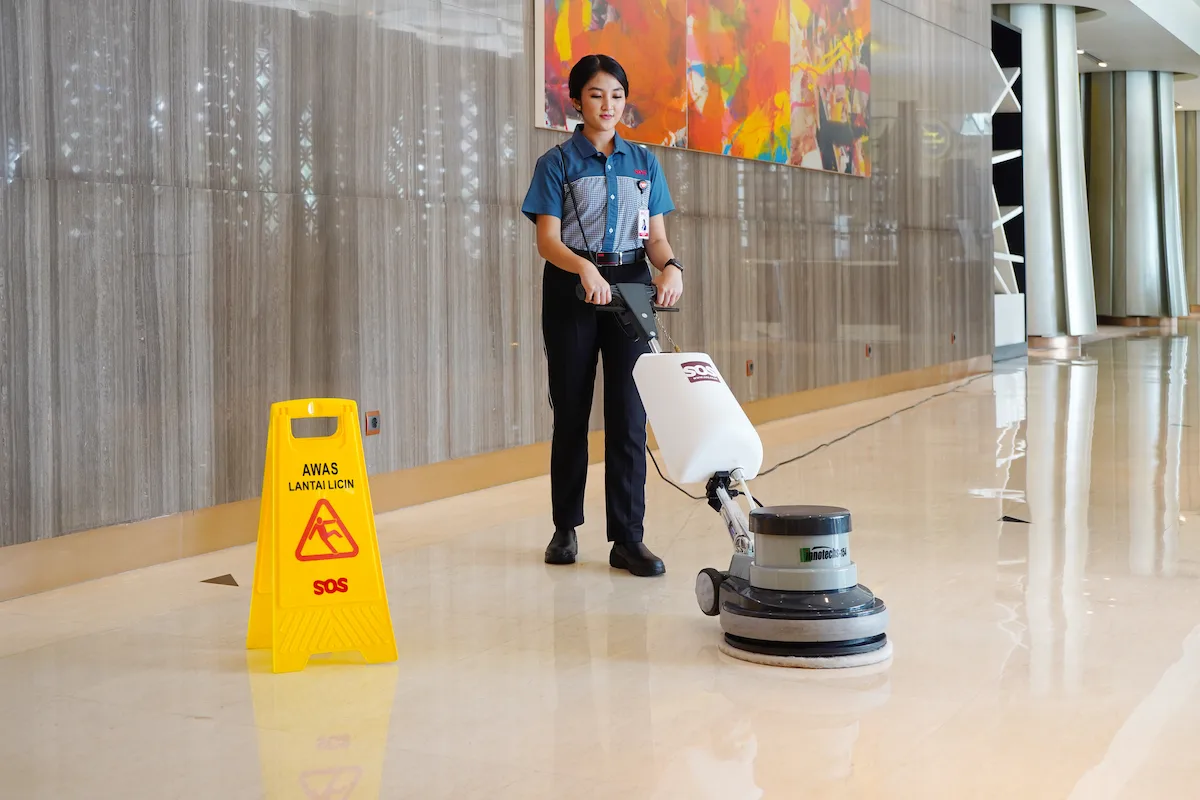
Building Maintenance Strategies to Maintain Cleanliness Standards
Professional building maintenance to maintain the cleanliness, safety, and performance of your company facilities. Discover the solution here.

Strategies to Manage Office Building Maintenance Costs Efficiently
Did you know there are smart strategies to manage office building maintenance costs? Not only can you improve efficiency, but you can also keep your office comfortable to use. Learn more here!